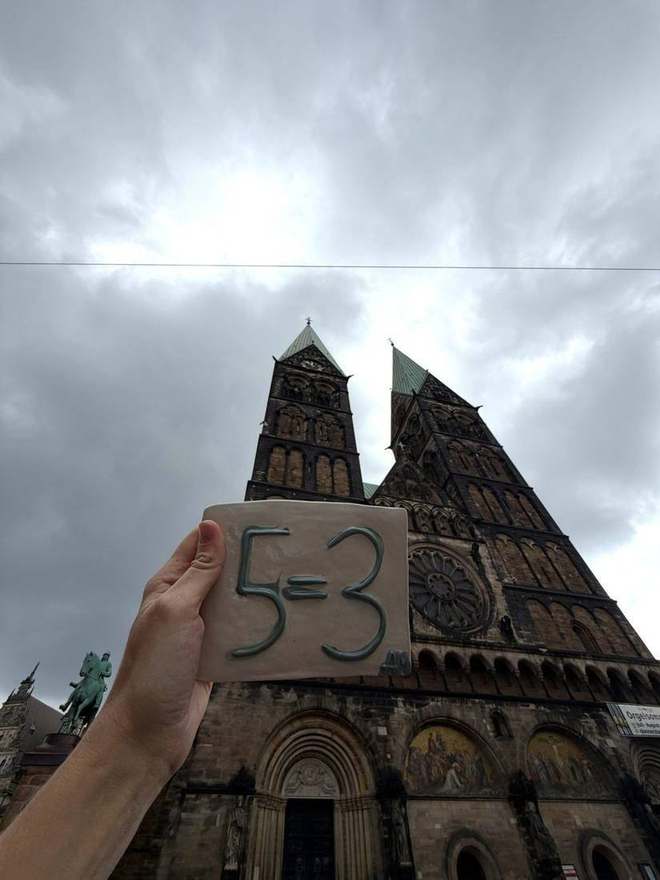
This isn't a list of medical advice, and it isn't meant to be. Nobody involved in 5=3 is a doctor, and pregnancy loss covers too much different ground — a missed miscarriage discovered at a routine scan, a loss much later that involved an impossible decision, a friend's experience that looks nothing like your own — for any single set of instructions to fit everyone. What follows is smaller and more honest than advice: it's a collection of things women in this community have said, more than once, actually helped them. Not prescriptions. Just patterns.
The first pattern is the least glamorous: staying busy with something real helped more than people expect. Several women in this community, including Anna herself, have talked about how caring for children they already had gave their days a structure that grief alone would have erased. That's not the same as suppressing what happened, and it isn't a suggestion that having other children is a requirement for coping — plenty of people don't have that option and grieve fully without it. It's simply that an ordinary task with a clear next step, a school pickup, a meal to make, gave some women a place to stand while the rest of it sorted itself out.
Being able to talk about it changed things
The second pattern shows up again and again: having someone who was actually willing to talk about the loss, rather than change the subject as soon as it came up, made a measurable difference. Anna has spoken about her husband being open to talking about both of her losses whenever she needed to, not just in the days immediately after. That willingness, to not flinch away from the subject weeks or months later, when everyone else assumes you've moved on, came up so often in conversations around this project that it stopped feeling incidental and started feeling like one of the few genuinely reliable things.
A third pattern is less about people and more about naming. Writing the numbers down, your own X and Y, whatever they are, was, for a lot of women, the first time the loss existed as a plain fact rather than something carried silently and vaguely. It didn't need to be public. Some women wrote it once, privately, and never showed anyone. Others found that the version of the formula meant for public plaques, or the printable stickers, gave them a way to say something true without having to construct a whole explanation around it.
Not one of these things works for everyone. All of them worked for someone.
A fourth thing that came up often was time itself, used deliberately rather than just endured, going back, sometimes years later, to a place connected to the loss. Anna's own return to Georgia, years after a pregnancy there ended without a heartbeat on the follow-up scan at home, and her decision to leave a plaque there in 2024, wasn't about closure in the tidy sense the word usually implies. It was closer to letting a place hold a fact she'd been holding alone, and finding that the place could carry some of the weight.
None of this adds up to a formula for healing the way X=Y is a formula for the loss itself. Grief doesn't compress that neatly, and anyone telling you it does is selling something. What's true across all of it is smaller: the women who've talked about what helped mention other people, plain language, and permission to still be affected by something everyone else assumes is finished. It's close to what actually stays with you after a loss like this, and close, too, to what a cracked plaque once taught me about carrying broken pieces into a new year. If none of that is enough, and the weight of it feels like more than you can carry alone, talking to someone you trust, or a professional, can help.
Your numbers matter too
Write down your own X = Y in solidarity, download the free stickers, or ask us to send a plaque to your city.
Share your numbers