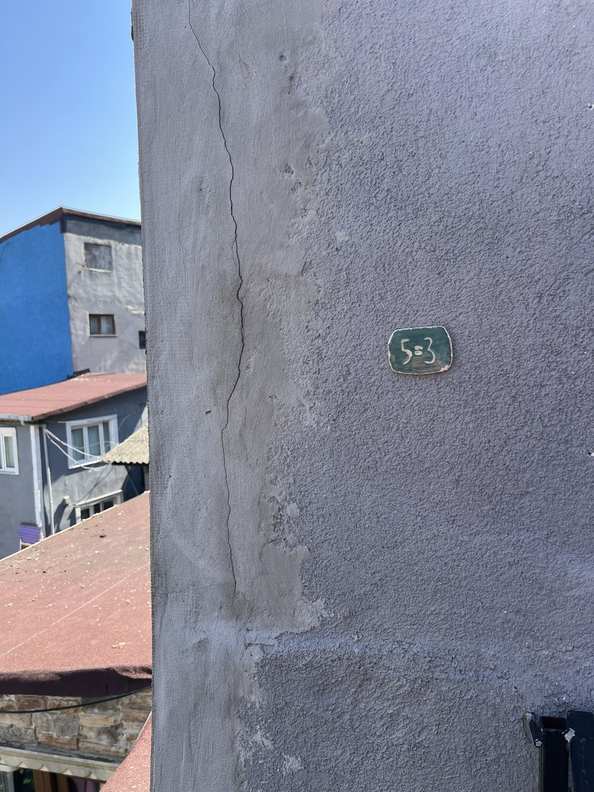
The formula behind this project is X = Y, where X is pregnancies and Y is children raised. For most people, those two numbers are the same, and there's nothing more to say about it. But roughly one in four pregnancies doesn't end in a birth. That ratio — one in four — is the quiet arithmetic sitting underneath every plaque we've ever placed, and it's worth spelling out plainly, because almost nobody hears it until they're the one living inside it.
I didn't know that ratio before my own losses. I don't think I'd ever been told it, in any of the ordinary ways information gets passed around — not by a doctor early in a pregnancy, not by family, not in any casual conversation about what to expect. You find out about the general prevalence of pregnancy loss the same way most people find out: after it happens to you, usually from a nurse or a support forum or a search engine at two in the morning, at exactly the moment you're least equipped to process it as a statistic rather than a catastrophe.
Why the number stays hidden
Part of the reason one in four stays so invisible is structural: many pregnancy losses happen early, sometimes before anyone beyond the pregnant person and maybe their partner knows a pregnancy exists at all. There's an old, largely unspoken convention of waiting until a certain number of weeks to tell anyone the news, partly built around this very risk — as if staying quiet about the pregnancy could also mean staying quiet about a loss, should one happen, and therefore never having to explain it to anyone. That convention protects people from having to announce bad news publicly. It also means the sheer frequency of loss never becomes visible, because so much of it happens inside a silence that was designed, with good intentions, to keep it private.
The result is that the statistic and the lived experience run on separate tracks. Plenty of people could probably recite "one in four" if you asked them directly, the way you might recite any fact you've absorbed passively. Far fewer have sat with what it means: that in any group of pregnant people, a meaningful share of them are currently living, right now, inside the smaller number of that X = Y equation, and you would have no way of knowing just by looking.
One in four is a number most people can recite. Far fewer have sat with what it actually means.
What the plaques do with a statistic. A street plaque can't responsibly cite a clinical study, and this project has never tried to. What it can do is take a number that mostly circulates as an abstraction and attach it to a specific, individual formula — 5=3, or whatever someone else's numbers happen to be — placed somewhere ordinary, where a stranger might walk past it on the way to work. The statistic tells you loss is common. An individual plaque tells you it happened to a specific, real person, in a specific place, and that person is still standing there, still making things, still walking around a city with you.
I think that's the actual gap the "one in four" framing can't close by itself. Knowing a number is common doesn't automatically make you feel less alone if it happens to you — loneliness isn't cured by statistics, it's cured by specific recognition. That's why the project relies on individual formulas rather than a single collective statistic repeated everywhere. Each plaque is one person's version of the one in four, made visible on purpose, so that the abstract ratio has at least one concrete, particular face attached to it in whatever city you happen to be standing in.
None of this is meant to normalize loss into something unremarkable, and it isn't meant to frighten anyone currently pregnant into constant worry either. It's meant to close the gap between a number that's technically well known and an experience that still, somehow, catches almost everyone by surprise. If one in four pregnancies doesn't reach a birth, then a great many people around you are carrying a version of this arithmetic quietly. The project simply asks: what if a few of those people wrote their numbers down where someone else could see them, instead of carrying the number alone.
Your numbers matter too
Write down your own X = Y in solidarity, download the free stickers, or ask us to send a plaque to your city.
Share your numbers